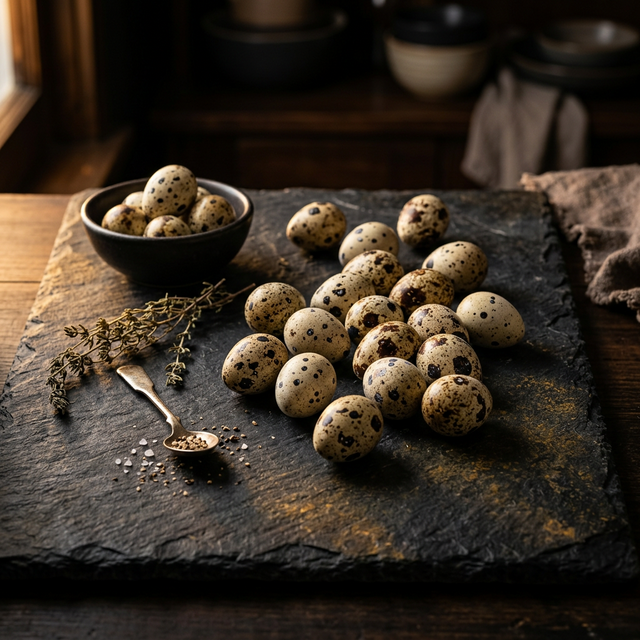
The Complete Guide to Quail Eggs in European Food Markets
The European food market has witnessed a remarkable shift in consumer behavior over the last decade.
Health-conscious consumers, premium restaurant culture, and rising interest in alternative protein
sources
have all contributed to a surge in demand for quail eggs — particularly in Germany, Austria,
Switzerland,
the Netherlands, and Scandinavia. Understanding why quail eggs command premium pricing and growing
market share is essential context for any food business evaluating these products.
Market Opportunity: Why Now?
The global quail egg market was valued at approximately €280 million in 2022 and is projected to
grow at
a CAGR of 5.8% through 2030. Germany alone imports an estimated 18 million quail eggs annually, with
demand predominantly driven by specialty food retailers (Feinkost), Asian supermarkets, and the
premium restaurant sector (Gastronomie). The supply gap is significant: domestic German production
covers less than 12% of demand, creating a persistent import requirement.
Albanian Quail Farms is uniquely positioned to fill this gap. With EU import documentation,
HACCP and ISO 22000 certification, and geographic proximity (just 1,200km from Munich by road),
we offer German buyers what no Turkish or Chinese alternative can: full EU compliance, rapid
delivery,
and traceability documentation compatible with German food safety law (LFGB).
"Quail eggs are no longer a curiosity — they're a category. Our AQF-sourced quail eggs are
our fastest-growing product line for the third consecutive year." — Retail Buyer, Berlin specialty
food chain
From the Farm: Our Breed & Rearing Practices
We raise the Coturnix coturnix japonica breed, widely regarded as the world's premier commercial
layer quail. AQF hens begin laying at approximately 45 days of age and produce at a rate of 280–320
eggs per hen per year under our managed conditions — a productivity rate that exceeds most competing
breeds by 15–20%.
Our rearing protocol prioritizes animal welfare and productivity simultaneously:
- Stocking density: Maximum 120 birds per square meter — well below EU
recommended limits
- Feed composition: 24% crude protein layer mash with no synthetic growth
promoters
- Lighting: 16 hours daily controlled light stimulation for consistent production
- Water: Filtered mountain spring water, tested monthly for contaminants
- Veterinary oversight: On-farm veterinarian conducts weekly flock health
assessments
- Biosecurity: Full quarantine protocol for all visitors; no external birds
introduced without isolation period
Freshness: Our Farm-to-Ship Protocol
Freshness is the single most important quality attribute for quail eggs. Unlike chicken eggs,
quail shells are naturally thinner and more permeable — meaning oxygen exchange happens faster,
accelerating albumen thinning. This is why our harvest-to-dispatch window is strictly controlled:
AQF Freshness Protocol:
- Eggs harvested twice daily: 06:00 and 14:00
- Transferred to 12°C collection room within 30 minutes
- Candled and sorted by automated optical system within 2 hours
- Packed and labeled within 4 hours of collection
- Cold storage at 4°C until dispatch
- Maximum farm-to-dispatch time: 24 hours
Our export eggs arrive in Germany with a typical "farm age" of 3–5 days — significantly fresher
than most competing imported products, which commonly reach European shelves 10–14 days post-lay
due to longer supply chains.
Regulatory Compliance for German Importers
Importing quail eggs from Albania to Germany requires compliance with both Albanian and EU food
safety regulations. Albania, as an EU candidate country, has aligned its food safety legislation
closely with the EU acquis communautaire. Our export documentation package includes:
- Albanian Veterinary Certificate (MBUNKSS Form)
- TRACES NT entry notification (completed by our logistics partner)
- Certificate of Origin (Chamber of Commerce notarized)
- Third-party lab report (salmonella, listeria, heavy metals)
- Nutritional analysis certificate (per batch or per product line)
- HACCP batch record and temperature log
Our export team is experienced in German customs procedures and works directly with appointed
customs brokers in Hamburg and Munich. We provide German-language documentation on request.
Culinary Applications: Why Chefs Love Quail Eggs
Beyond their nutritional profile, quail eggs offer culinary properties that have made them a
fixture on premium European menus. Their small size (average 9–12g) allows for elegant,
visual-forward plating. The yolk-to-white ratio is significantly higher than chicken eggs,
giving them a richer flavor and creamier texture when soft-boiled (cured, or "mollet").
Classic European applications include:
- Soft-boiled on toast (German Frühstücksvariation)
- Deviled quail eggs as canapés (Fingerfood, widely popular at events)
- Fried quail egg atop steak tartare
- Pickled quail eggs in boutique food retail (growing trend)
- Scotch quail eggs as premium gastropub fare
- Raw yolk in premium beef tartare (Michelin-starred trend)
- As garnish for vichyssoise, salad Niçoise, ramen
The B2B Partnership Advantage
When you source quail eggs from Albanian Quail Farms, you're not just buying a product —
you're gaining a supply chain partner. We offer:
- Guaranteed weekly supply year-round with no seasonal gaps
- Flexible MOQ starting at 100 dozen eggs per delivery
- Co-branding & white labeling on retail packs
- Marketing support: product photography, nutritional content, shelf talkers
- 30-day payment terms for qualified buyers
- German-language account support via our Hamburg-based sales representative